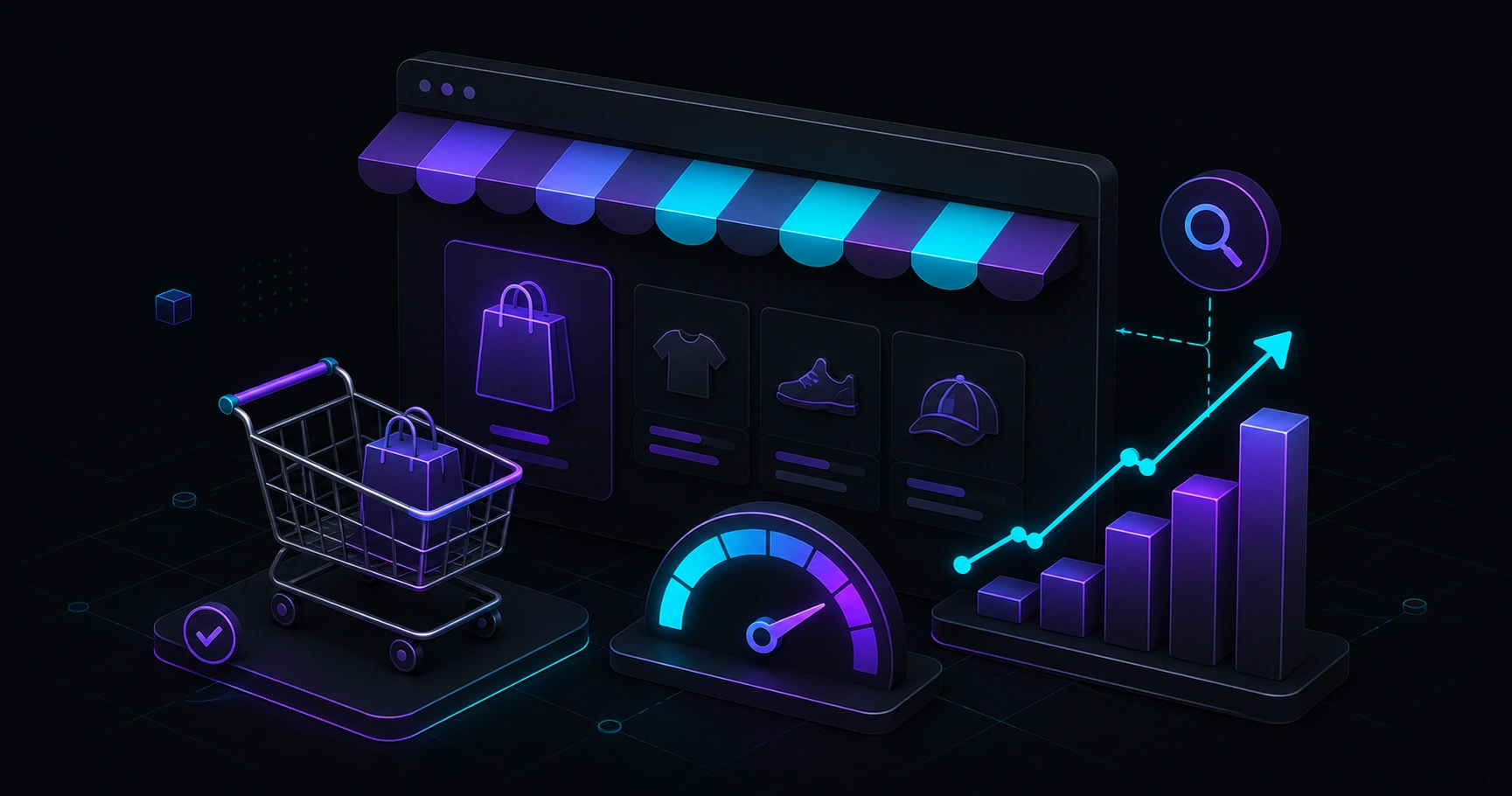
In an online store, speed is not a nice-to-have — if a category takes forever to load or the buy button stutters, people leave, and Google picks up on that too. Talking about e-commerce speed and SEO is really the same story from two angles: sell more and show up better in search.
This guide stays practical: which pages to check first, how that ties to Core Web Vitals, and what you can review yourself before touching code or switching hosts. If you just read about store architecture, it pairs well with our headless e-commerce guide — here the focus is performance and rankings, not stack choices.
Table of contents
- Why speed matters in e-commerce
- SEO and conversion: different goals, same fixes
- Core Web Vitals in an online store
- Which pages to test first
- Common reasons stores feel slow
- Quick checklist before changing anything
- Myths we hear all the time
- FAQ
Why speed matters in e-commerce
Picture someone searching Google for a product you sell. They land on your product page, stare at a mostly blank screen for three seconds, and hit back. That is not just a lost sale — it is a signal the page did not deliver.
Speed weighs more in e-commerce than on a blog because:
- Competition is direct — marketplaces, other brands, comparison sites.
- Users are one click from buying — every bit of friction counts.
- Templates repeat — one slow category template means hundreds of slow URLs.
- Mobile leads — slower networks, smaller screens, less patience.
You do not need to obsess over a green score in a tool. You do want your home page, key categories, and best-selling products to feel snappy on the phone your customers actually use.
SEO and conversion: different goals, same fixes
Google does not publish a rule like «load in 1.8 s, gain two positions». It does use experience signals — including Core Web Vitals — as a tiebreaker when two pages match the same search intent.
In practice:
- For SEO: indexable product and category pages, no mass crawl errors, reasonable field metrics in Search Console.
- For sales: checkout that does not freeze, filters that respond, images that do not take forever.
The upside: many fixes help both. Compressing a hero product image improves LCP and helps shoppers see the item before they bounce.
Core Web Vitals in an online store
The three pillars are still LCP (loading), INP (tap response), and CLS (layout stability). In e-commerce they usually show up like this:
| Metric | In a store, often hurt by… |
|---|---|
| LCP | Large product image, homepage slider, slow server on category pages |
| INP | Heavy filters, cart JavaScript, chat or analytics on every page |
| CLS | Promo banners, late fonts, images without reserved space |
If the acronyms feel fuzzy, we explain them plainly in Core Web Vitals explained: what to measure. To move from theory to action, our practical PageSpeed audit guide helps you read a report without getting lost.
Which pages to test first
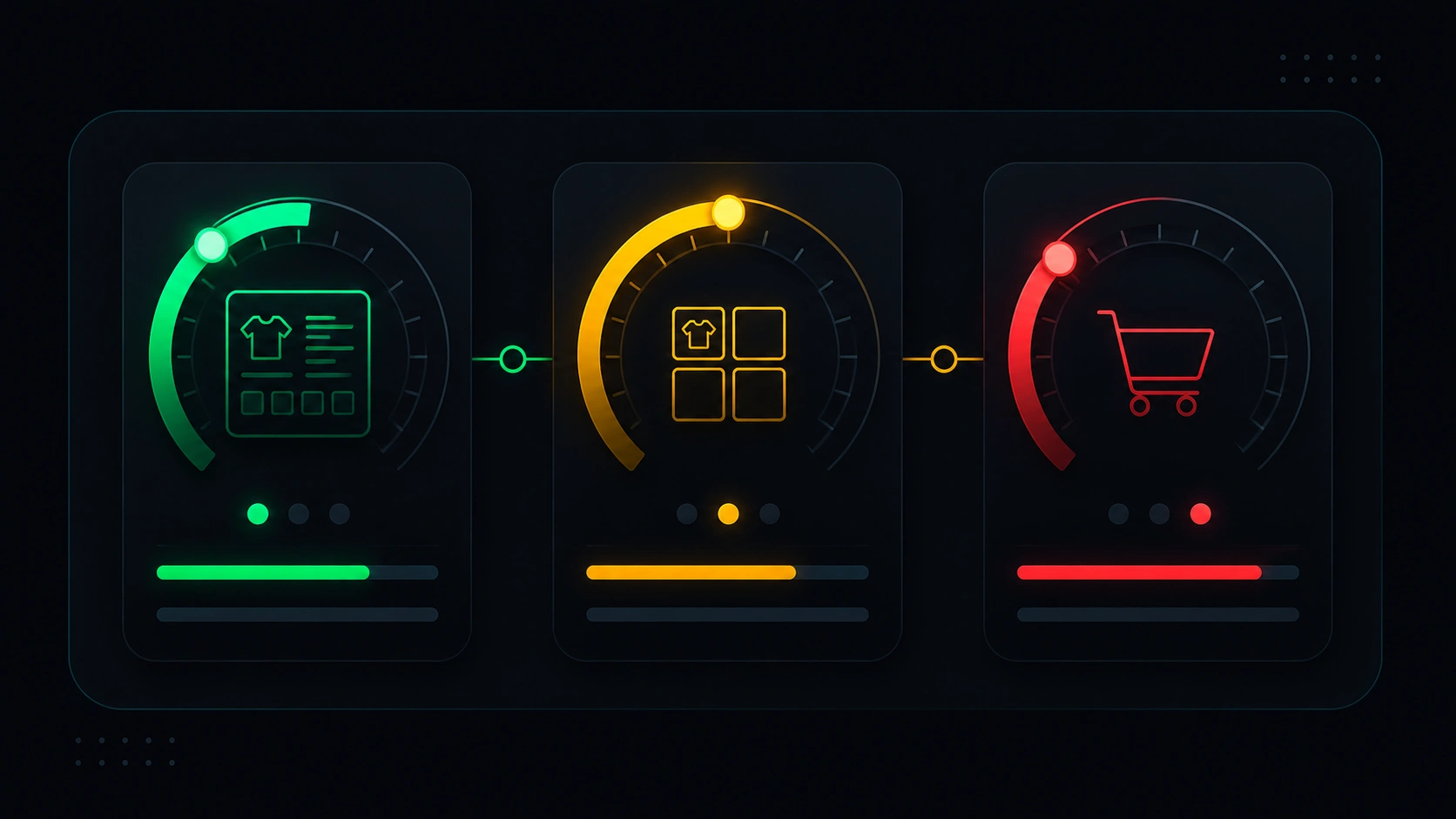
Do not start with the homepage on perfect WiFi and a plugged-in laptop. Prioritize like this:
- Top 3–5 products by organic traffic or sales (Search Console + analytics).
- 2–3 categories that get clicks from Google or campaigns.
- Homepage — yes, but after the templates that scale.
- Cart and checkout — INP often suffers here even when checkout is not indexed.
Always test mobile in PageSpeed Insights or similar tools. Optimizing desktop-only on a store means polishing a window almost nobody uses to buy.
Want a quick snapshot of your domain? On our technical SEO landing you will find a PageSpeed simulator to try a URL before opening long reports.
Common reasons stores feel slow
Images out of control
4000 px product photos served to a 390 px phone screen — extremely common, and often cheap to fix with compression and responsive sizing.
Too many third-party scripts
Ad pixels, chat, reviews, A/B tests, heatmaps… each adds weight. On categories with dynamic filters, the main thread suffers.
Plugin creep
On WooCommerce and similar platforms it is tempting to install «just one more thing». Over time, the theme ships assets half your visitors never need on that URL.
Heavy shared templates
One bad product template times 800 SKUs equals 800 slow URLs. Fix the template, fix the batch.
Hosting far from shoppers
If you sell in Europe and the server sits on another continent, TTFB shows up — especially on mobile. You do not always need to migrate; CDN or sensible cache can help.
Quick checklist before changing anything

- Have you tested one real product page and category in PageSpeed (mobile)?
- Does Search Console show product URLs in Experience without mass warnings?
- Do main images weigh reasonably (tens of KB, not megabytes)?
- Can you list third-party scripts running on every page?
- Is the issue one URL or an entire template?
- Have you compared lab data with field data (real users)?
If you answered «no» to several, start by measuring and grouping — not by installing another blind cache plugin.
Myths we hear all the time
«A 100 Lighthouse score means I sell more»
Lighthouse is a controlled snapshot. You can score high and still lose sales to a confusing checkout or stale inventory.
«Speed only matters on Black Friday»
Traffic spikes punish slow stores, yes. But Google crawls year-round and shoppers compare options every month.
«Going headless makes everything fast automatically»
Well-built headless helps, but huge images and extra scripts still exist. Architecture does not replace judgment.
«Checkout does not matter for SEO»
You may not index checkout, but it matters for revenue — and a sticky cart often means high INP on earlier steps in the same journey.
FAQ
How fast does an online store need to be to rank?
There is no magic number. Aim for good or «needs improvement» Core Web Vitals on main templates — especially mobile and field data when Search Console has enough volume.
What matters more: homepage or product page?
For transactional SEO, product and category pages usually win — that is where purchase intent lands. Home matters for brand, but do not measure there alone.
Does e-commerce speed only affect Google?
Other search engines too — but conversion and paid traffic hurt just as much. Expensive ads cannot fix a product landing that takes six seconds to show the price.
How long until improvements show in Search Console?
Field data often updates on roughly four-week cycles. After big changes, give it time before judging.
Can classic WooCommerce be fast enough for SEO?
Yes — with a light theme, sensible images, fewer plugins, and appropriate hosting. Headless is an option, not the only path to reasonable speed.
Want to test your store speed?
On Veloce Devs you can run our PageSpeed simulator and explore technical SEO without the overwhelm — a solid first step before a full audit.
Leave a Reply